
Australia’s Migration Budget for 2026-27- A Synopsis
Australia’s 2026–27 Federal Budget has sent a clear message to aspiring migrants worldwide: Australia is not closing its doors, but it is becoming increasingly selective about who walks through them. While the overall permanent migration ceiling remains unchanged at 185,000 places, the structure, priorities, and direction of the skilled migration program reveal a major policy shift toward regional workforce shortages, onshore applicants, and economic productivity.
The budget confirms that the migration program will continue with a 70:30 split between the Skilled and Family streams, reaffirming Australia’s long-standing focus on skilled migration as an economic driver. Of the total allocations, nearly 129,590 places are expected to favor applicants already living and working in Australia, while approximately 55,110 places are projected for offshore skilled applicants.
This reinforces what migration professionals have been witnessing over the past two years — Australia is heavily prioritising onshore candidates. The government’s rationale is closely linked to the ongoing housing crisis, labour market integration, and infrastructure pressures. Applicants who are already contributing to the Australian economy, paying taxes, and living in regional or metropolitan areas are now strategically positioned ahead of offshore candidates.
One of the most significant announcements in the budget is the proposed overhaul of the skilled migration Points Test — the first major structural review in 14 years. Consultations are scheduled to commence in June 2026, with the government aiming to redesign the points system to better attract high-productivity migrants and align migration outcomes with long-term economic needs.
This is a major development. The existing points test has often been criticised for rewarding age and qualifications without adequately assessing real economic contribution, regional workforce demand, or labour market sustainability. The upcoming reform could potentially reshape how Australia selects migrants for the next decade.
Another major trend emerging from the budget is the increased focus on regional Australia. The government is expected to expand allocations for the Subclass 491 Skilled Work Regional visa across multiple states and territories. At the same time, tighter caps are anticipated for the Skilled Independent (Subclass 189) visa, which remains one of the most competitive pathways to permanent residence.
State nomination programs under Subclass 190 and 491 are also expected to undergo redistribution of allocations based on workforce shortages and state-specific economic priorities. States facing severe labour shortages may receive enhanced allocations, while others may tighten eligibility criteria further.
South Australia offers a practical example of the changing migration landscape. During the 2025–26 program year, South Australia significantly expanded its occupation list in anticipation of receiving a stronger quota allocation. However, the actual nomination numbers allocated to the state remained limited. As a result, the state has largely focused on accommodating applicants already residing and working in South Australia. Offshore applicants, despite having eligible occupations, have so far seen virtually no invitations from the state.
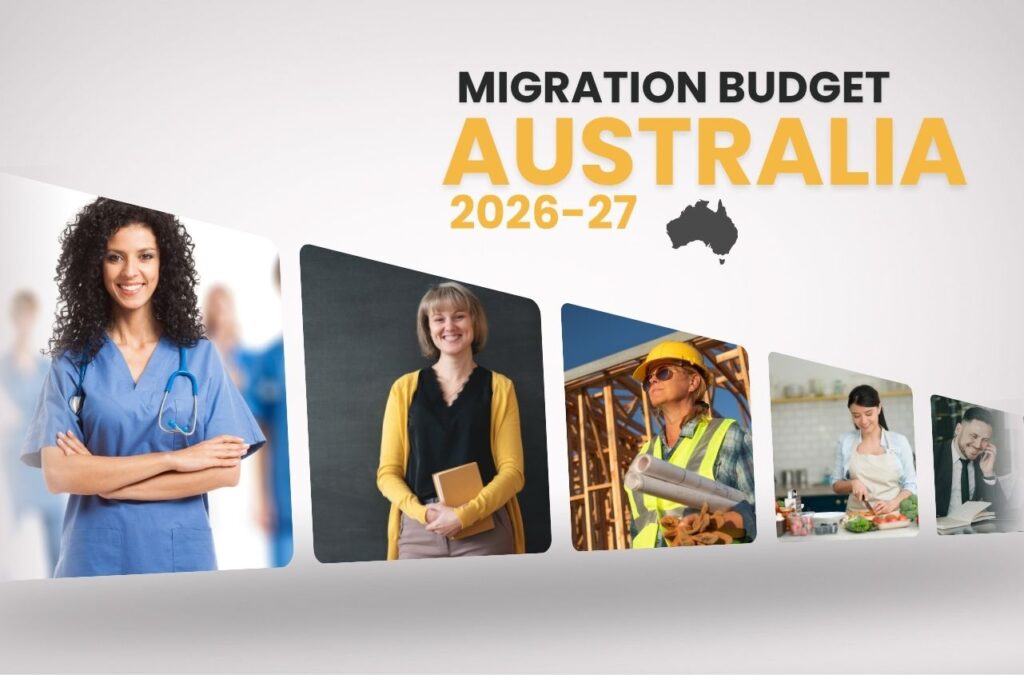
The budget also highlighted the occupations likely to receive priority processing and stronger regional nomination support. Acute shortages continue in sectors such as nursing, aged care, teaching, disability support, community services, construction trades, mechanical and electrical trades, and agriculture and farm management. These sectors are expected to remain central to Australia’s migration planning over the coming years.
For prospective migrants, the direction is now unmistakably clear. Australia’s migration system is evolving into a more targeted, workforce-driven model where regional contribution, labour market participation, and onshore presence carry increasing weight. Offshore applicants may continue to face slower invitation rounds, stricter nomination criteria, and heightened competition unless they fall within critical shortage occupations.
The 2026–27 Federal Budget does not signal a reduction in migration ambition. Instead, it reflects a recalibration of priorities. Australia still needs migrants — but increasingly, it wants migrants who can immediately integrate into the workforce, contribute to regional development, and support long-term economic growth.